What Is Piper methysticum?
Piper methysticum is the scientific name for the plant commonly called kava or kava kava. It belongs to the pepper family, Piperaceae, and has a long history of cultivation and traditional use across the Pacific.
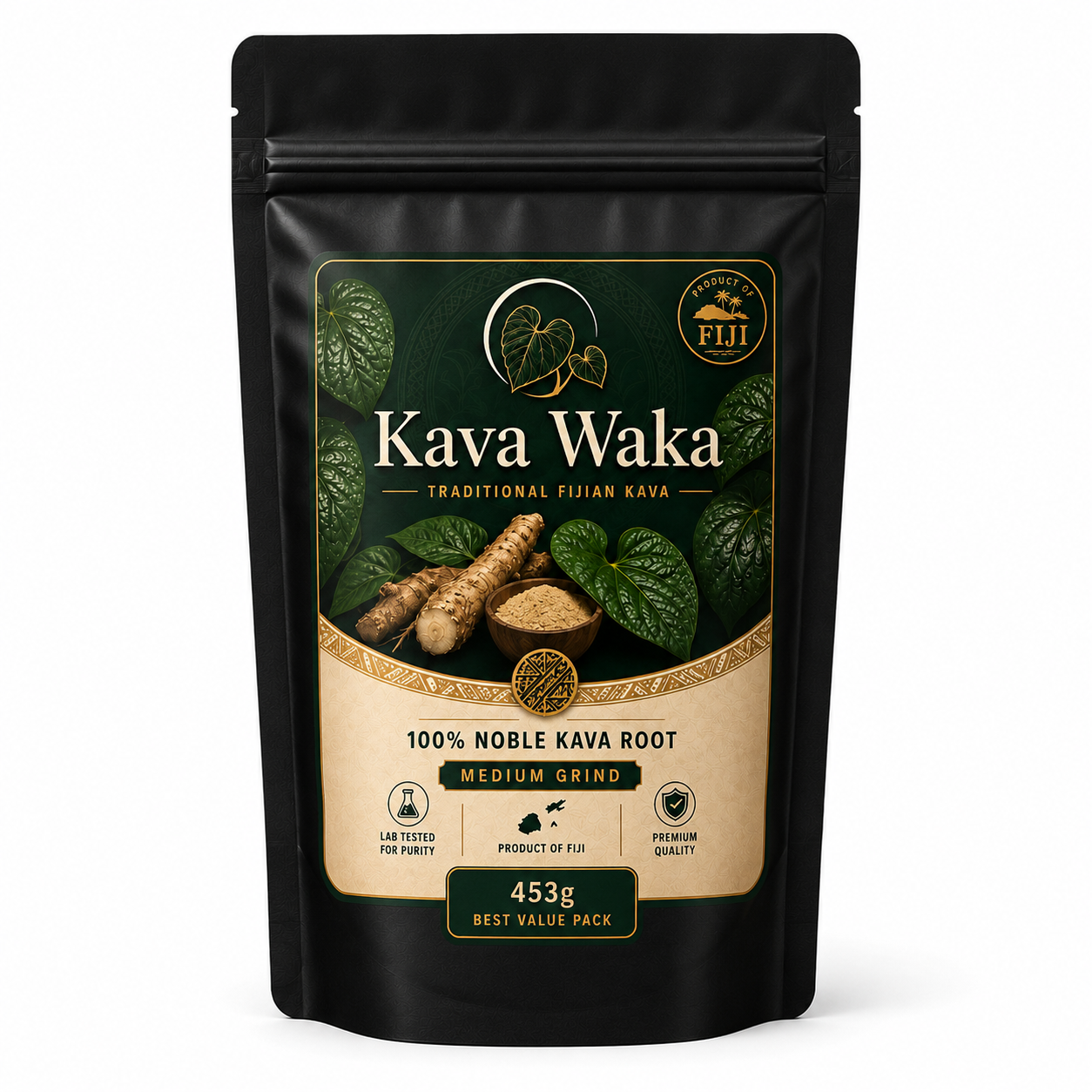
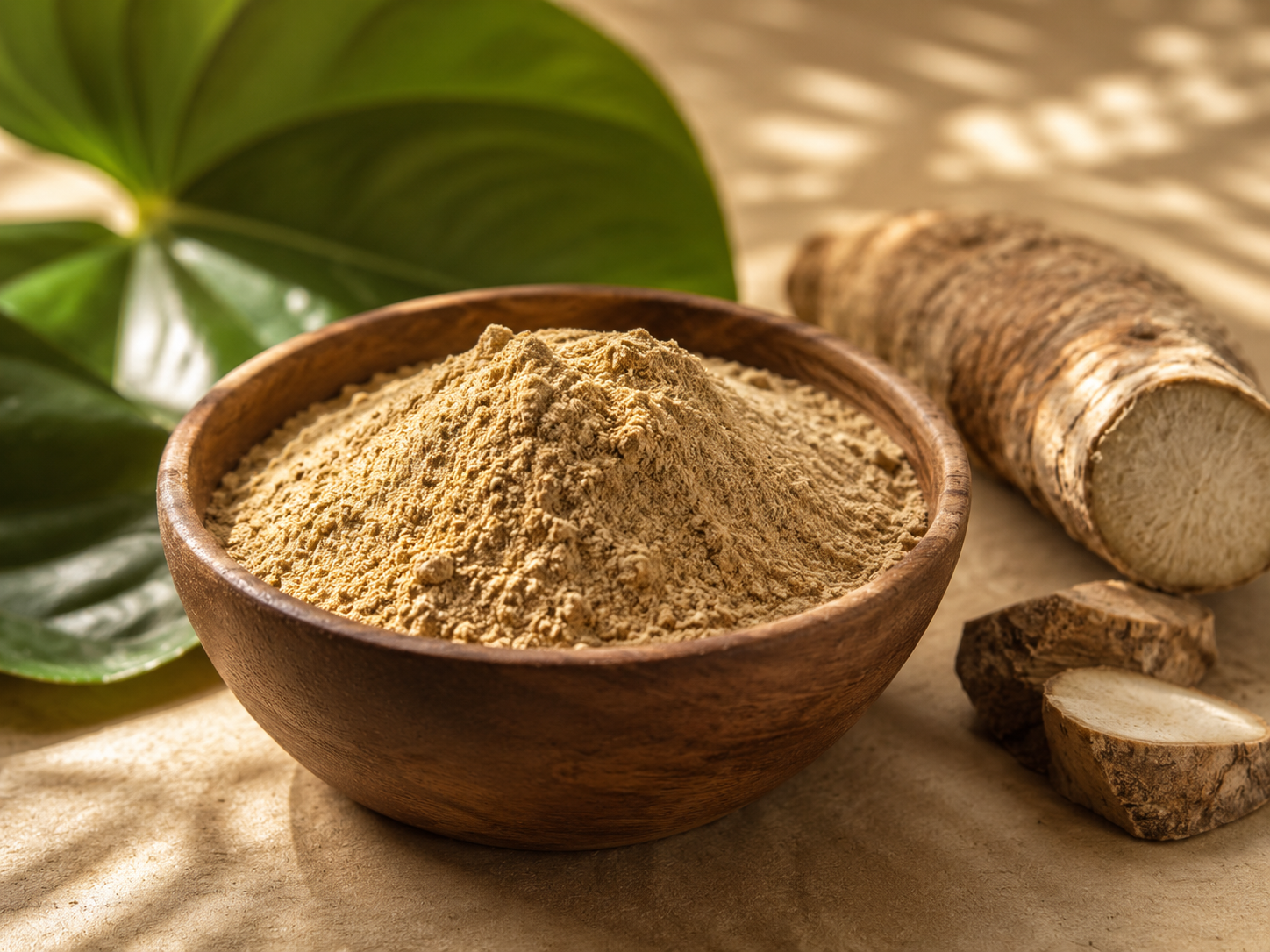
The traditional beverage is associated with the plant’s underground portions rather than its leaves. Ground root material is mixed with water and strained to make kava.
“Kava kava” is a common doubled form of the name. The botanical species name remains Piper methysticum.
Which Part of the Kava Plant Is Used?
Traditional kava products use underground plant portions, including roots and basal material. In Fijian terminology, Waka commonly refers to lateral roots, while Lawena refers to basal or stump/root-crown material.
What Are Kavalactones?
Kavalactones are a group of naturally occurring compounds associated with kava. They are one reason researchers and product makers distinguish kava from ordinary culinary roots or herbal teas.
The amount and profile of kavalactones can vary with cultivar, plant part, processing and product format.
How Does the Plant Become a Kava Drink?
For traditional medium grind, the dried kava material is ground, placed in a strainer and worked through water. The fibrous material is removed before serving.
Instant powders and extracts are processed differently and should not be assumed to be equivalent to traditional ground root.
Piper Methysticum Products in Canada
Canadian shoppers may encounter Piper methysticum on labels for different product formats. Read the exact ingredients and preparation directions rather than assuming every product using the botanical name is traditional ground kava.